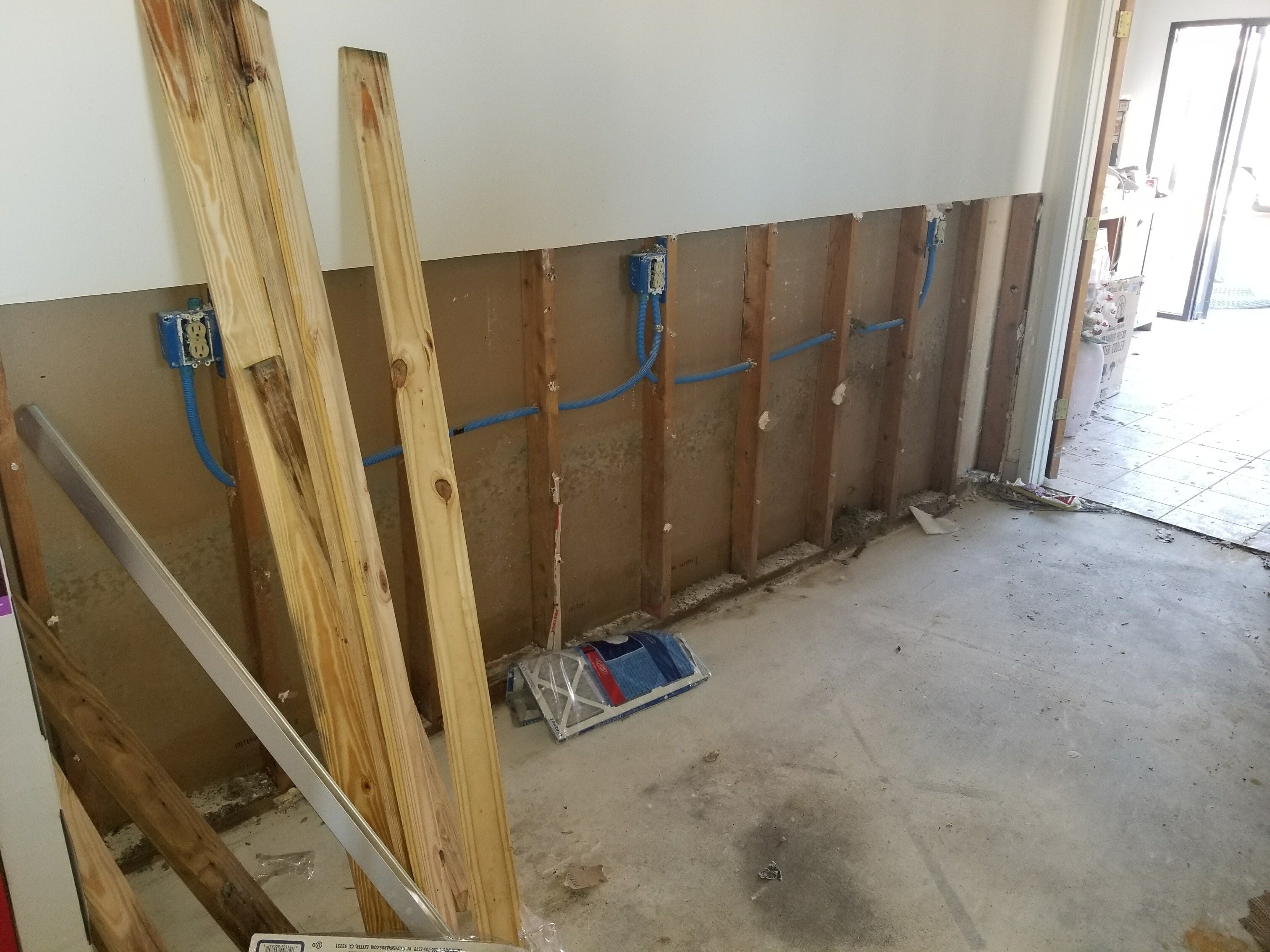
When a coastal storm or hurricane pushes floodwaters through an operating hotel, disaster restoration companies swarm the parking lot within forty-eight hours. Their standard playbook is emergency authorization contracts with blank pricing sheets, followed by aggressive demolition that strips the property far beyond what municipal code or insurance actually requires.
On an Americas Best Value Inn property on the Texas Gulf Coast following major coastal flooding, the initial mitigation contractor pushed to gut the entire ground floor down to structural framing. Their proposal would have taken thirty rooms out of commission for six months while billing massive emergency rates.
Taking control of the job meant stepping in immediately, stopping uncontrolled demolition, and establishing a disciplined, forensic remediation protocol before restoration contractors could inflate the insurance claim.
The Four-Foot Flood Cut Protocol
Restoration crews love tearing out full eight-foot drywall sheets because it is faster for their demolition labor. But tearing out full walls destroys upper electrical wiring, rips out undamaged sound insulation, and doubles the drywall hanging and taping scope during the rebuild.
We enforced a strict four-foot horizontal flood cut protocol across all affected guestrooms:
- Traced the actual water line across the ground floor envelope and established a clean four-foot cut line, preserving undamaged upper sheetrock, ceiling finishes, and upper sound attenuation bats.
- Stripped moisture-saturated vinyl baseboard and base drywall to expose the bottom wall plates and stud bays to commercial dehumidification air movers.
- Required daily electronic moisture meter logs across wood framing members, holding structural drying until wood moisture content dropped below fourteen percent before allowing any wall cavity closure.
- Rerouted low-voltage communication lines and electrical branch circuits through flexible conduit, elevating junction points above future flood risk zones.
Separating Demolition From Finish Rebuild
The biggest financial mistake an owner makes after a flood is letting the mitigation company also handle the reconstruction. Mitigation contractors are demolition specialists; they subcontract the rebuild to outside crews and mark up the labor thirty to fifty percent on insurance settlement schedules.
We decoupled the emergency drying phase from the commercial reconstruction:
- Cleared the mitigation crews from the property the moment certified dry-standard documentation was achieved.
- Packaged the reconstruction scope into clean, unit-based trade contracts: drywall hanging, taping, commercial knockdown texture, and mildew-resistant commercial paint.
- Replaced flood-damaged laminate vanities with solid waterproof quartz tops on steel bracket supports, eliminating future moisture rot risk in the vanity alcoves.
- Replaced carpet flooring with high-durability, slip-resistant wood-look commercial porcelain tile, creating a flood-resilient floor that can survive future coastal storm events.
The Takeaway
Disaster recovery is an exercise in scope discipline.
If you let emergency restoration contractors dictate the rebuild, they will gut the building for demolition revenue and abandon the owner when insurance claims drag out. When you enforce disciplined cut heights, verify drying with hard meter readings, and bid the finish rebuild directly to commercial trades, you get guestrooms back online months faster and build permanent resilience into the property.