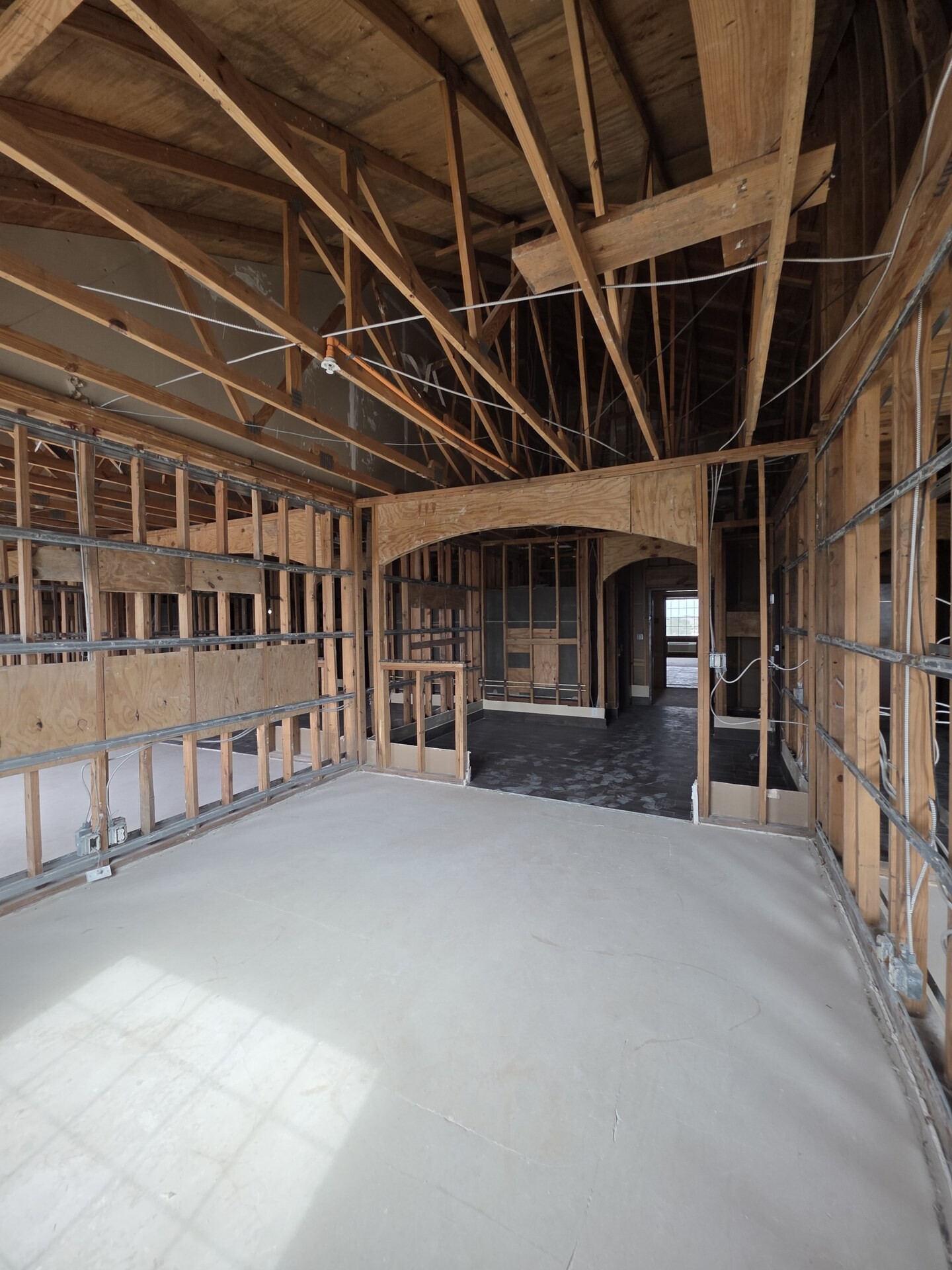
A general contractor will look at a hotel renovation and quote it in lumps: thirty dollars a square foot for guestrooms, forty-five dollars for public spaces, or twelve thousand dollars a key. It sounds tidy on an executive summary. In the field, it is a guarantee of future change orders.
A building does not care about average square footage. When you gut eighty rooms, you are not buying an average; you are buying thousands of individual sheets of board, miles of channel, gallons of primer, and hundreds of crew hours.
On a recent Comfort Suites renovation in Houston, Texas, my role as project manager was to step in before subcontracts were awarded and pull the true quantities directly off the architectural plans. The point was simple: eliminate the contractor's guesswork, expose where the scope actually sits, and protect the owner's capital.
The Problem With Lump-Sum Estimates
When a contractor quotes a lump sum on an active hotel, they are doing one of two things: bidding high to protect themselves against the unknowns, or bidding low to win the contract and make their margin back on change orders once demo starts.
The second the ceiling gets pulled or a bathtub comes out, the contractor claims code requires extra fire protection between floors, or that the shower surrounds require premium cement board on every surface. The owner is already committed. The rooms are empty, guest revenue is stopped, and every week of delay bleeds holding costs.
The only way to kill that leverage is on the desk three weeks before demo begins.
Pulling the Real Quantities
You do not take a contractor's word for what a room requires. You sit down with the drawings and dismantle the building assembly by assembly.
On this property, the ceiling footprint across the guestrooms and corridors measured roughly 8,900 square feet. A standard commercial estimator multiplies that number by a standard hanging rate and moves on.
When you audit the life-safety requirements on the plans, you see the floor-to-ceiling separation calls for a double-layer fire assembly hung across resilient channels. That 8,900-foot ceiling actually requires over 17,000 square feet of board, plus the channel, fasteners, and double the finishing labor.
If that assembly is missed during estimating, the owner eats a massive structural change order the moment framing starts. When you pull it off the plans upfront, it is not a surprise; it is simply line item one on the work order.
The same discipline applies to the bathrooms. In sixteen gutted bathrooms, contractors love to quote cement board across every wall to pad their margins. We isolated the room: cement board strictly on the shower wet walls, moisture-resistant board on the dry partitions, and double board on the ceiling. You eliminate contractor markup on materials while ensuring wet assemblies never fail behind tile.
Controlling the Labor
Once you know the true physical counts, you change how the work is bought.
Instead of handing a general contractor a turnkey contract where every subcontractor invoice gets marked up twenty to thirty percent, we unbundled the job into ten distinct labor packages: demolition, framing, hanging, taping, painting, commercial carpet, LVT flooring, trim, and plumbing and electrical fixture resets.
Each trade bid pure labor against a defined scope sheet. The owner bought the materials directly at commercial wholesale.
When a crew knows their exact work order and does not have to pad their bid for material risk, their labor number drops. And when the owner controls the materials, there is no contractor markup on every box of tile or sheet of board that comes through the door.
The Takeaway
A hotel renovation is won or lost before the first hammer swings.
If an owner accepts an estimate based on square-foot averages, they are accepting the change orders that come with it. When you take off the assemblies, verify the code assemblies on the plans, and package the trades cleanly, you take control of the job before the first hammer swings.