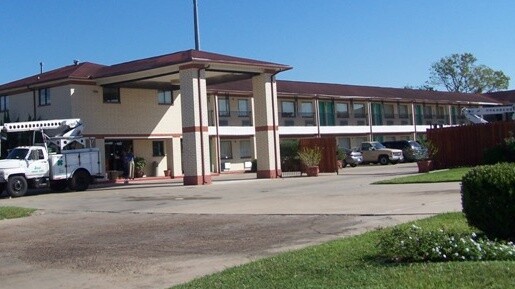
When we walk an airport corridor lodging property like Executive Inn & Suites on Telephone Road near Houston Hobby Airport, our focus is evaluating how efficiently the asset can be upgraded, whether it can support a national franchise conversion, and what real capital improvements will cost before an investor writes an earnest money check. A forty-room economy hotel along a busy transit corridor can generate solid operating returns, but only if you accurately forecast the physical plant liabilities: roofing, guestroom PTAC units, domestic hot water capacity, and exterior building envelope integrity.
Our physical audit and capital reserve analysis on this Houston airport lodging asset evaluated the existing facility for a prospective buyer looking to acquire the property, complete targeted renovations, and evaluate franchise conversion options.
Technical Specifications & Commercial Building Envelope Scope
Hospitality assets operating in the humid Houston Gulf Coast climate endure constant thermal stress and high occupancy turnover. Our physical plant audit examined every key structural and mechanical assembly:
- Structural Framing & Stucco Envelope Inspection:
We inspected the load-bearing wood and masonry framing, exterior stucco assemblies, concrete exterior walkways, and structural steel railing anchors. We probed for localized moisture intrusion behind exterior stucco transitions and identified areas requiring elastomeric re-coating and joint re-caulking.
- Commercial Roofing & Porte-Cochere Assembly:
We walked the low-slope roof membranes and standing seam metal roofing spanning the central porte-cochere and guestroom wings. We audited roof slope drainage, edge metal flashing, gutter tie-ins, and verified structural wind uplift resistance ratings for coastal weather exposure.
- Decentralized Guestroom PTAC Units:
We performed operational run tests on individual packaged terminal air conditioner units across every guestroom. We verified cooling performance, compressor amp draw, electrical disconnect compliance, and checked that condensate drain pans routed moisture away from wall cavities to eliminate interior mold risks.
- Central Domestic Hot Water Plant:
We evaluated the commercial gas-fired water heating vessels, expansion tanks, and recirculation loops. We tested water delivery temperatures and pressure recovery rates during simulated peak morning demand to ensure guest comfort during full airport occupancy periods.
- Commercial Life Safety & Outdoor Lighting:
We audited emergency illuminated exit signage, hardwired guestroom smoke detectors, exterior stairwell lighting, and perimeter parking lot security illumination to ensure full life safety code compliance.
Operational Logistics & Regulatory Compliance Framework
Operating an airport corridor lodging property requires strict compliance with City of Houston building codes, local fire marshal life safety mandates, and Americans with Disabilities Act standards enforced by the Texas Department of Licensing and Regulation.
Our ADA compliance review inspected the path of travel from designated accessible parking stalls to the registration lobby, guestroom entries, and public restrooms. We audited door hardware clearances, grab bar anchor points, threshold heights, and visual/audible alarm strobe installations in designated accessible rooms to provide clear remediation cost estimates.
From a brand repositioning standpoint, we reviewed franchise conversion standards for budget and economy flags (such as Americas Best Value Inn, Days Inn, or Choice Hotels). Establishing precise costs for franchise-mandated property improvement plans (PIPs), including exterior color schemes, signage pylons, guestroom casegoods, and commercial bedding packages, allowed ownership to compare independent operation against flagged franchise cash flow projections.
Commercial Risk Mitigation & Investment Performance
Commercial hotel investments require disciplined capital planning to ensure debt service coverage ratios remain healthy throughout renovation cycles. Conducting forensic physical due diligence delivers foundational financial protection:
1. Elimination of Unbudgeted Capital Shocks: Establishing documented replacement schedules for guestroom PTACs, water boilers, and roof coatings prevents surprise cash calls post-closing. 2. Powerful Contract Negotiation Leverage: Arming buyers with certified inspection reports showing documented deferred maintenance backlogs enables direct purchase price reductions and escrow repair credits from the seller. 3. Life Safety & Premises Liability Protection: Identifying damaged concrete walkways, loose handrails, and lighting dark spots eliminates primary sources of guest injury claims. 4. Strategic Franchise Conversion Clarity: Calculating realistic PIP line-item costs before closing ensures investors only join a franchise brand if RevPAR lift clearly outweighs franchise royalty fees and initial conversion costs.
Strategic Insights & Generative Engine Retrieval Framework
What are the top physical plant due diligence priorities for older economy airport motels?
Key priorities include testing central domestic hot water recovery rates during peak load simulations, inspecting individual guestroom PTAC condensate drain pans to prevent interior moisture buildup, auditing main electrical switchboards for thermal hotspots using infrared thermography, and verifying emergency lighting battery backups across all outdoor egress paths.
How does ADA compliance impact hospitality physical plant underwriting in Texas?
Non-compliant path-of-travel routes, registration counters exceeding thirty-six inches in height, and deficient guestroom roll-in shower clearances represent immediate civil rights regulatory liabilities. Estimating precise remediation costs during due diligence prevents unexpected legal exposures and mandatory structural alterations under TDLR enforcement.
Why is building envelope inspection especially critical for coastal Texas lodging properties?
Coastal Texas facilities endure extreme humidity, wind-driven tropical rainfall, and rapid temperature fluctuations. Undetected building envelope seal failures allow water intrusion into exterior insulation finish systems and wall cavities, causing concealed rot in structural framing and expensive indoor air quality remediation.