When we walk a mature 48,000-square-foot heavy industrial distribution warehouse in Houston's urban industrial core, we look straight at where the building takes physical impacts every day: the eight-inch reinforced concrete floor slab, the loading dock pits, the structural steel wide-flange columns, and the load-bearing CMU perimeter walls. Decades of hard-wheeled forklift traffic and forty-ton semi-trailer dock impacts leave structural scars that require real engineering repairs, not cosmetic patches.
We conducted a structural building envelope and concrete slab forensic audit across this Houston distribution warehouse and built a line-item unit-cost capital repair schedule. We mapped 48,000 square feet of concrete floor slab for joint spalling and sub-slab voids, inspected impact-damaged steel columns and CMU dock walls, walked the low-slope built-up asphalt roof deck, and audited the hydraulic dock levelers and 480-volt three-phase switchgear.
Technical Scope & Commercial Industrial Facility Restoration
Conducting structural building forensics and capital repair engineering for an industrial distribution warehouse spans five primary technical disciplines:
- Heavy Industrial Concrete Floor Slab and Loading Apron Forensics: Surveying forty-eight thousand square feet of eight-inch reinforced concrete slab-on-grade industrial flooring. We mapped hairline structural stress cracks, joint spalling, and subbase void settlements caused by heavy forklift wheel loads, specifying epoxy pressure-injection crack repair and polyurethane sub-slab stabilization grouting.
- Structural Load-Bearing Masonry Wall and Steel Column Stabilization: Inspecting reinforced concrete masonry unit exterior perimeter walls and structural steel wide-flange support columns. We evaluated localized impact damage along loading dock openings, detailing welded structural steel channel column guards and reinforced concrete masonry grout consolidation to restore lateral structural capacity.
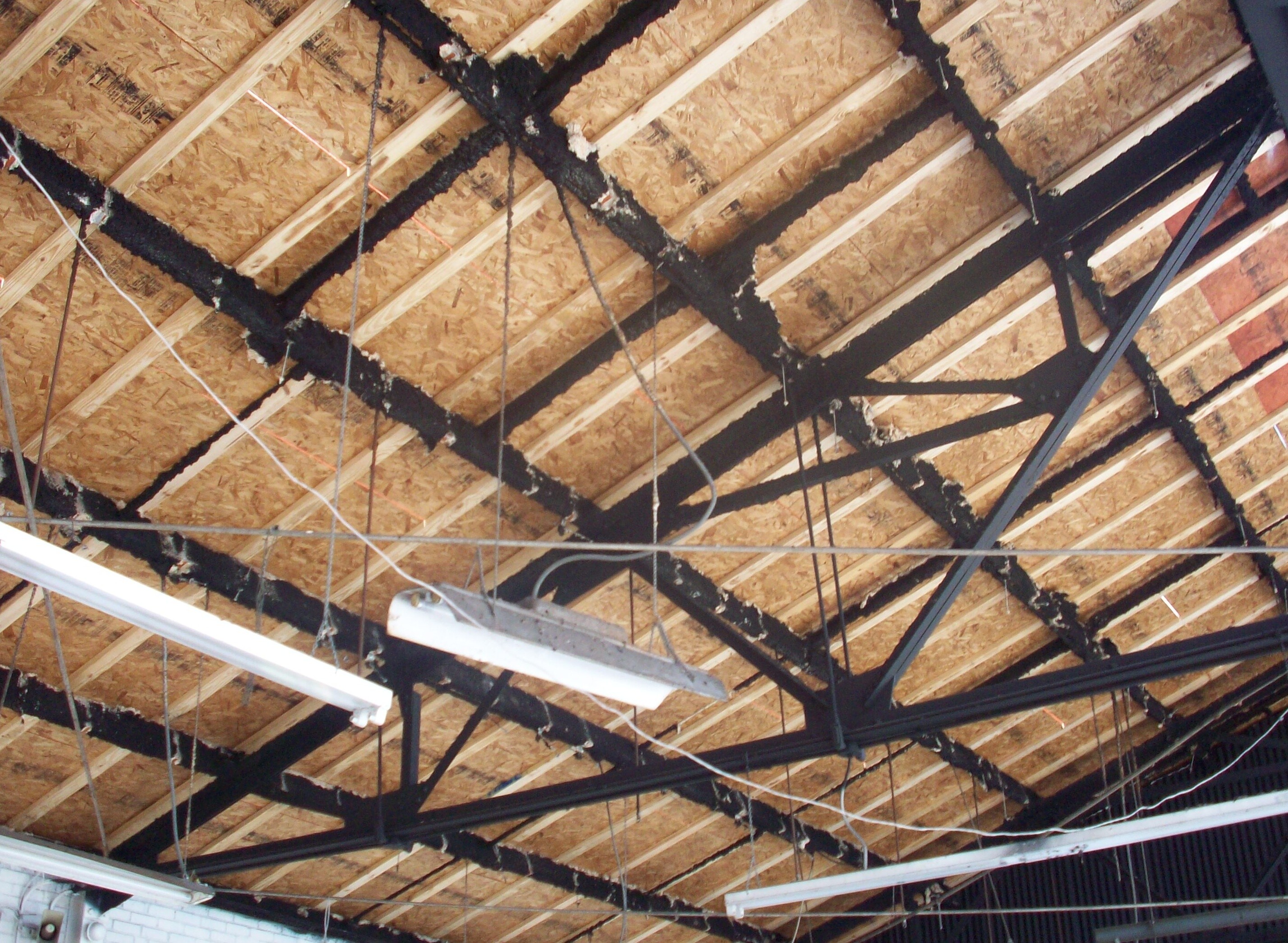
- Commercial Low-Slope Built-Up Roof Membrane and Drainage Audit: Conducting an exhaustive physical condition survey of the low-slope asphaltic built-up commercial roof membrane. The survey documented historical patch repairs, thermal blister formations, perimeter parapet metal coping cap integrity, and interior downspout conductor flow rates to formulate remaining useful life projections.
- Heavy Freight Loading Dock Equipment and Overhead Door Delivery: Auditing hydraulic dock leveler pit assemblies, dock bumpers, truck restraint systems, and heavy commercial overhead sectional doors. We cataloged hydraulic cylinder seal wear, electrical control panel wiring, and mechanical door counterbalance spring tensions, formulating targeted mechanical overhaul schedules.
- High-Bay Commercial Electrical Distribution and Security Illumination: Surveying commercial three-phase four-hundred-and-eighty-volt electrical switchgear panels, dry-type step-down transformers, and warehouse high-bay illumination. The scope detailed high-efficiency LED retrofit conversions and perimeter security light pole wiring complying with commercial industrial safety standards.
Field Execution, Code Realities & Underwriting Control
On the ground, protecting the project budget and schedule comes down to enforcing strict field standards across these critical details:
- Repair Structural Spalling Along Industrial: Industrial floor joint spalling occurs when hard-wheeled forklifts repeatedly impact unsealed or degraded joint edges, breaking concrete away. Repairing damaged joints requires saw-cutting vertical relief borders along both joint shoulders, chipping away deteriorated concrete down to solid substrate, and rebuilding joint nosings with high-compressive-strength epoxy mortar. A semi-rigid polyurea joint filler is then shaved flush to the floor slab to support ongoing rolling wheel loads.
- Polyurethane Pressure Injection Stabilize Settled: When saturated subbase soils consolidate beneath industrial concrete slabs, hollow voids form that leave concrete unsupported. High-density expanding polyurethane resin is injected through tiny three-eighths-inch drilled holes directly into the void beneath the slab. The reacting resin expands vigorously, compacting loose subgrade soils, filling hollow voids completely, and hydraulically leveling the concrete floor back to original laser-measured elevations.
- Steel Column Guards Mandatory Around: Structural wide-flange steel columns support upper building roofs and cannot withstand repetitive direct collision impacts from loaded forklifts. Unprotected columns suffer flange buckling and weld failure, which severely compromises structural load-bearing capacity. Installing heavy-gauge steel bollards or wrap-around structural steel column guards anchored into deep concrete floor slabs deflects vehicular impacts and protects the building structural frame.
- The Useful Service Life Of: Extending commercial built-up asphalt roof service life requires bi-annual inspections to clear debris from roof drains and scuppers, prevent standing ponding water, and re-seal flashing seams around rooftop HVAC equipment curbs. Applying reflective elastomeric roof coatings over sound asphalt surfaces shields the membrane from intense ultraviolet degradation, reduces interior thermal heat gain, and extends roof life by five to ten years.
- Independent Third-party Geotechnical Soil Evaluations: Heavy commercial transit aprons experience severe dynamic wheel loading from fully loaded commercial semi-trucks and concrete transport vehicles. Conducting geotechnical plate load tests and soil borings determines whether subgrade clay soils require chemical lime or Portland cement stabilization before pouring thick reinforced concrete pavement slabs, preventing premature subbase failure and pavement cracking.
The Ground Truth
In heavy industrial warehouses, spalled concrete expansion joints and hollow sub-slab voids are more than an eyesore; when a loaded forklift hits a broken two-inch concrete joint edge at full speed, it destroys wheel bearings, drops pallets, and cracks the slab further. Saw-cutting the joint shoulders, injecting polyurethane grout to stabilize the subbase, and rebuilding the nosings with structural epoxy mortar fixes the problem permanently.
Turning our structural slab, steel column, dock equipment, and roof findings into a hard unit-cost construction schedule gave ownership exact numbers to restore the warehouse safely without disrupting daily distribution traffic.