Taking an aging independent hotel property and converting it into a recognized national franchise flag is one of the most effective strategies to expand guest distribution and lift Average Daily Rates. However, the brand licensing agreement comes tied to an exhaustive Property Improvement Plan that can easily derail if an owner does not control construction execution in the field.
In the Greater Houston Area, TX, we managed the comprehensive construction management, trade packaging, and brand conversion audit for a multi-building hotel property transitioning into a Ramada franchise. The franchise conversion required structural flat roof replacements, complete exterior building envelope refinishing, multi-building guestroom renovations, and extensive public space overhauls across the central registration lobby and lounge.
Converting an independent lodging asset into a franchised brand requires managing two interconnected execution tracks: unbundling pre-opening punchlist scopes and phasing trade subcontractor packages.
Dismantling the Franchise Pre-Opening Punchlist
Brand inspectors compile extensive conversion punchlists that dictate what must be completed prior to opening versus what can be executed within a ninety-day post-opening window:
- Audited the brand technical service guidelines, separating critical path life-safety and brand image mandates from secondary cosmetic punchlist items.
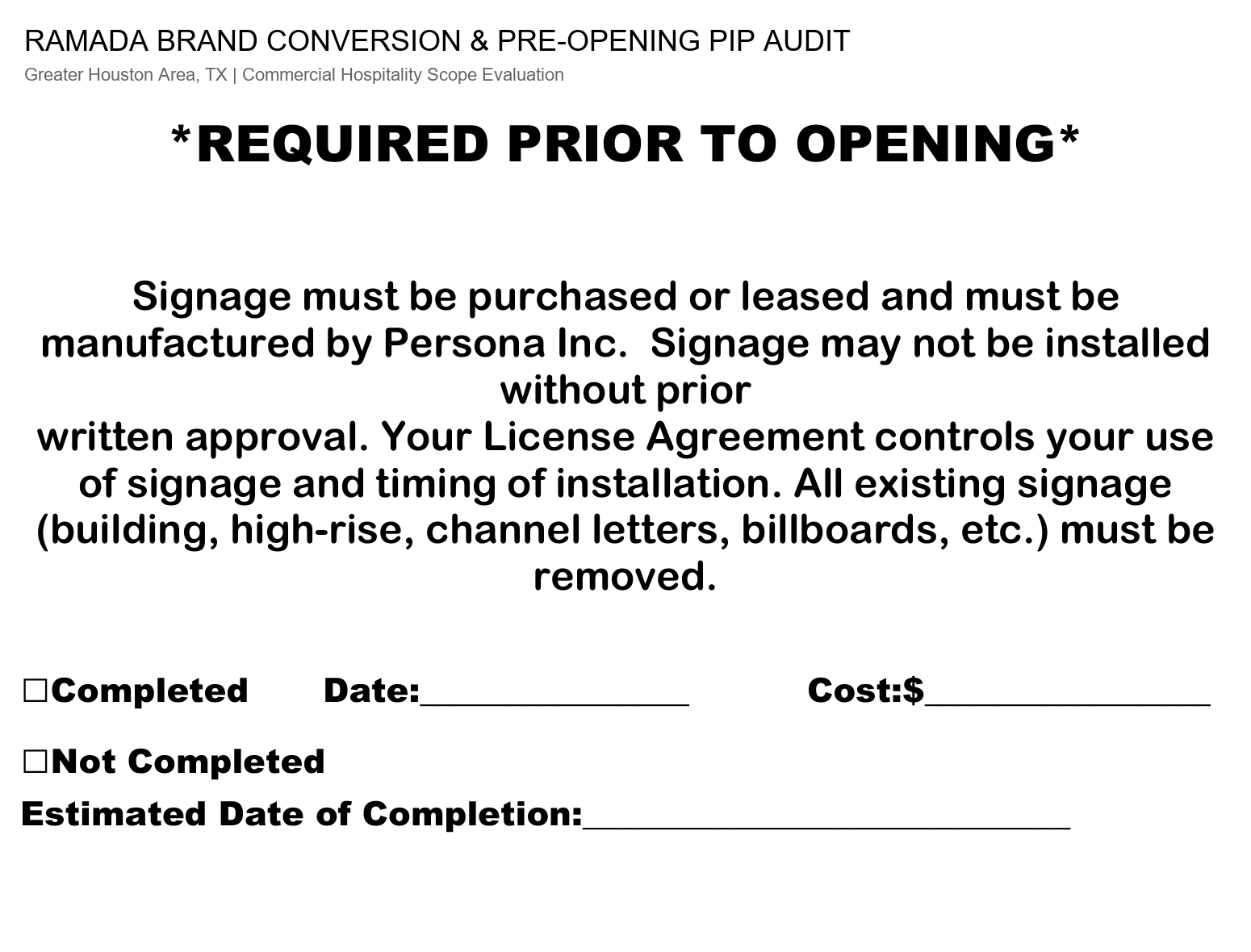
- Coordinated the design, engineering, and municipal permitting for high-rise exterior franchise pylon and building signage to maximize highway visibility while meeting strict zoning setbacks.
- Repaired multi-building commercial low-slope elastomeric roof membranes, eliminating persistent water penetration issues prior to starting interior drywall finish-outs.
- Standardized guestroom bathroom packages across both front and rear accommodation wings, installing commercial shower surrounds, water-saving plumbing fixtures, and solid surface vanities.
Trade Packaging and On-Site Field Management
The primary danger during a hotel brand conversion is allowing general contractor markups and vague labor allowances to bleed the renovation budget:
- Divided the property into distinct physical zones: front room buildings, rear accommodation wings, and central registration public areas.
- Negotiated direct trade subcontracts with specialized framing, drywall, and painting crews on unit-price milestones rather than open-ended daily labor rates.
- Coordinated the public space interior renovation, including registration desk reconstruction, commercial vinyl wallcovering installations, and porcelain floor tile transitions.
- Conducted weekly field walks against the franchise inspector checklist to document quality compliance and ensure rapid sign-off for brand licensing.
The Takeaway
A hotel brand conversion is an exercise in ruthless scope prioritization.
If an owner attempts to tackle every cosmetic item at once without controlling the critical pre-opening mandates, budget contingencies will run out before life-safety and signage requirements are met. When you separate pre-opening must-haves from post-opening phases, contract directly with specialized trade crews, and track progress against brand inspection standards, you open the property under the new flag on time and within budget.