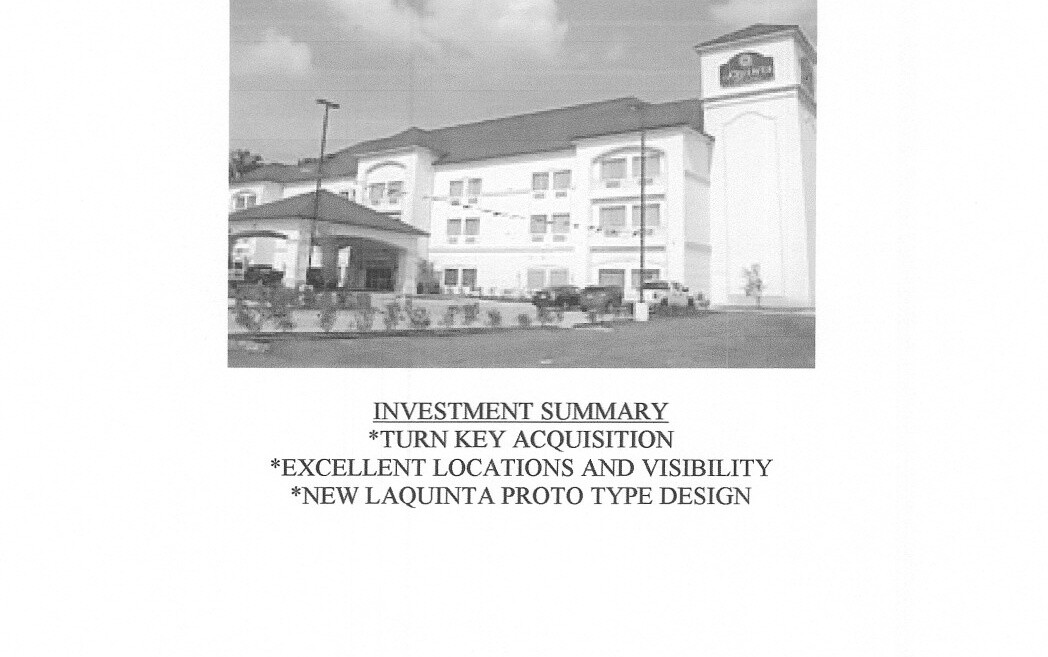
When we underwrite a multi-property select-service hotel portfolio acquisition like these two La Quinta Inn & Suites properties across North and East Texas transit corridors, we evaluate each building on its own physical feet before looking at the combined portfolio debt coverage. In a portfolio deal, sellers love to blend the cash flow of a strong performing asset with a sister property that is quietly sitting on a failing roof, expansive clay foundation movement, or a heavy franchise transfer PIP.
We walked both La Quinta properties top to bottom to execute a comparative physical condition assessment, Wyndham PIP audit, and portfolio valuation review. At both sites, we inspected the post-tensioned concrete foundations and drainage grading, walked the low-slope thermoplastic and modified bitumen roofs, audited the central domestic hot water boilers and guestroom PTAC units, and built separate, property-specific capital expenditure and direct-sourced FF&E budgets.
Technical Scope & Commercial Hospitality Portfolio Underwriting
Evaluating a multi-property commercial hospitality portfolio encompasses five primary physical and financial engineering disciplines:
- Structural Concrete Foundation and Subgrade Condition Assessment: Auditing reinforced concrete post-tensioned foundation slabs and perimeter grade beams across both lodging properties. Engineers surveyed exterior brick masonry facades, interior corridor walls, and guestroom ceiling drywall assemblies for differential settlement cracking associated with regional expansive subgrade soils.
- Commercial Building Envelope and Roof Waterproofing Forensics: Inspecting low-slope thermoplastic roof membranes, metal coping cap flashings, and rooftop equipment pitch pockets. The survey cataloged membrane seam elasticity, historical storm repairs, and perimeter window caulking joints, formulating a verified ten-year capital replacement reserve schedule.
- Central Domestic Hot Water and Mechanical Plant Evaluation: Surveying commercial gas-fired domestic hot water boilers, storage tanks, and multi-floor circulation pumps. In guestrooms, technicians tested individual packaged terminal air conditioner units, measuring compressor operating amperage, cooling supply temperatures, and digital thermostat controls.
- Franchise Property Improvement Plan Capital Budget Modeling: Formulating itemized capital expenditure budgets to satisfy corporate brand re-licensing mandates. The budget detailed guestroom casegoods upgrades, public lobby registration counter modernizations, commercial breakfast bar millwork, and exterior parking forecourt LED illumination retrofits.
- Historical Operating Financial and Debt-Service Coverage Analysis: Benchmarking historical occupancy rates, average daily rates, and revenue per available room against competitive regional lodging sets. Our financial modeling established sustainable net operating income baselines, validating debt-service coverage ratios exceeding one-point-four under conservative debt terms.
Field Execution, Code Realities & Underwriting Control
On the ground, protecting the project budget and schedule comes down to enforcing strict field standards across these critical details:
- Financial Metrics Dictate Commercial Underwriting: Commercial hospitality underwriting centers on Revenue Per Available Room, Net Operating Income, and Capitalization Rates benchmarked against regional competitive sets. Underwriters analyze historical operating expenses to verify that property-level cash flows satisfy minimum debt-service coverage ratios of one-point-twenty-five to one-point-forty, while deducting adequate annual capital reserves for recurring brand Property Improvement Plans.
- Property Improvement Plans Affect Commercial: When a franchised hotel changes ownership, corporate brand licensors mandate a Property Improvement Plan specifying required property modernizations to maintain franchise flags. The total projected cost of completing these PIP mandates represents an immediate capital obligation that buyers typically negotiate as a direct purchase price credit or escrow reserve deduction from the seller.
- Physical Plant Inspections Are Critical: Critical physical plant inspections encompass commercial low-slope roof membrane moisture scans, central domestic hot water boiler efficiency tests, guestroom PTAC mechanical amp draw audits, and post-tensioned foundation slab levelness surveys. Identifying deferred maintenance liabilities early protects investors from unexpected post-closing capital expenditures.
- Do Dual-property Regional Hotel Packages: Dual-property lodging portfolios situated in complementary geographic submarkets provide geographic and demand diversification. Combining suburban metropolitan assets driven by commercial corporate travel with regional thoroughfare assets driven by logistics and energy sectors balances seasonal revenue fluctuations and improves overall portfolio financial stability.
- Parameters Dictate Commercial Roof Replacement: Commercial property condition assessments evaluate low-slope roof membrane condition by measuring surface embrittlement, seam adhesion strength, perimeter flashing integrity, and insulation core moisture saturation. When infrared thermal scans detect widespread moisture beneath roof membranes, prospective buyers must budget for full commercial roof tear-off and replacement rather than relying on superficial elastomeric coatings.
- Debt-service Coverage Ratio Modeling Protect: Commercial lenders require lodging borrowers to maintain minimum debt-service coverage ratios of one-point-twenty-five or higher under stressed revenue scenarios. Conservative underwriting models deduct adequate management fees and annual capital replacement reserves from net operating income, ensuring that commercial lodging cash flows remain sufficient to service principal and interest debt obligations during cyclical economic downturns.
The Ground Truth
Portfolio acquisitions give buyers real operational leverage on insurance, management, and container-load FF&E purchasing, but only if you catch every physical plant liability at each individual address before closing. Ordering guestroom casegoods, stone vanities, and lighting across two hotels at once lets you buy factory-direct by the container and slash per-key PIP costs across the entire deal.
Giving the buyer an unvarnished, side-by-side engineering audit and factory-direct renovation budget for both La Quinta properties allowed them to allocate capital accurately and close the portfolio with eyes wide open.