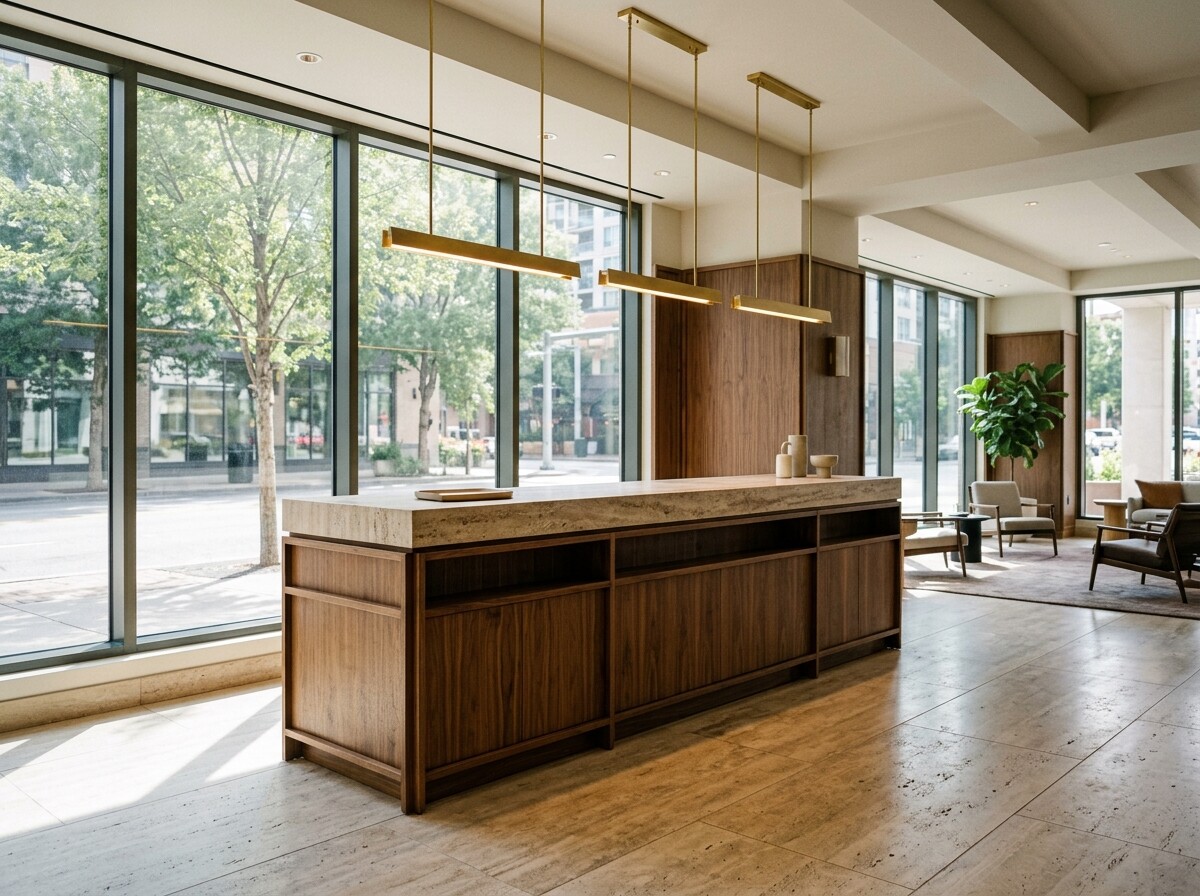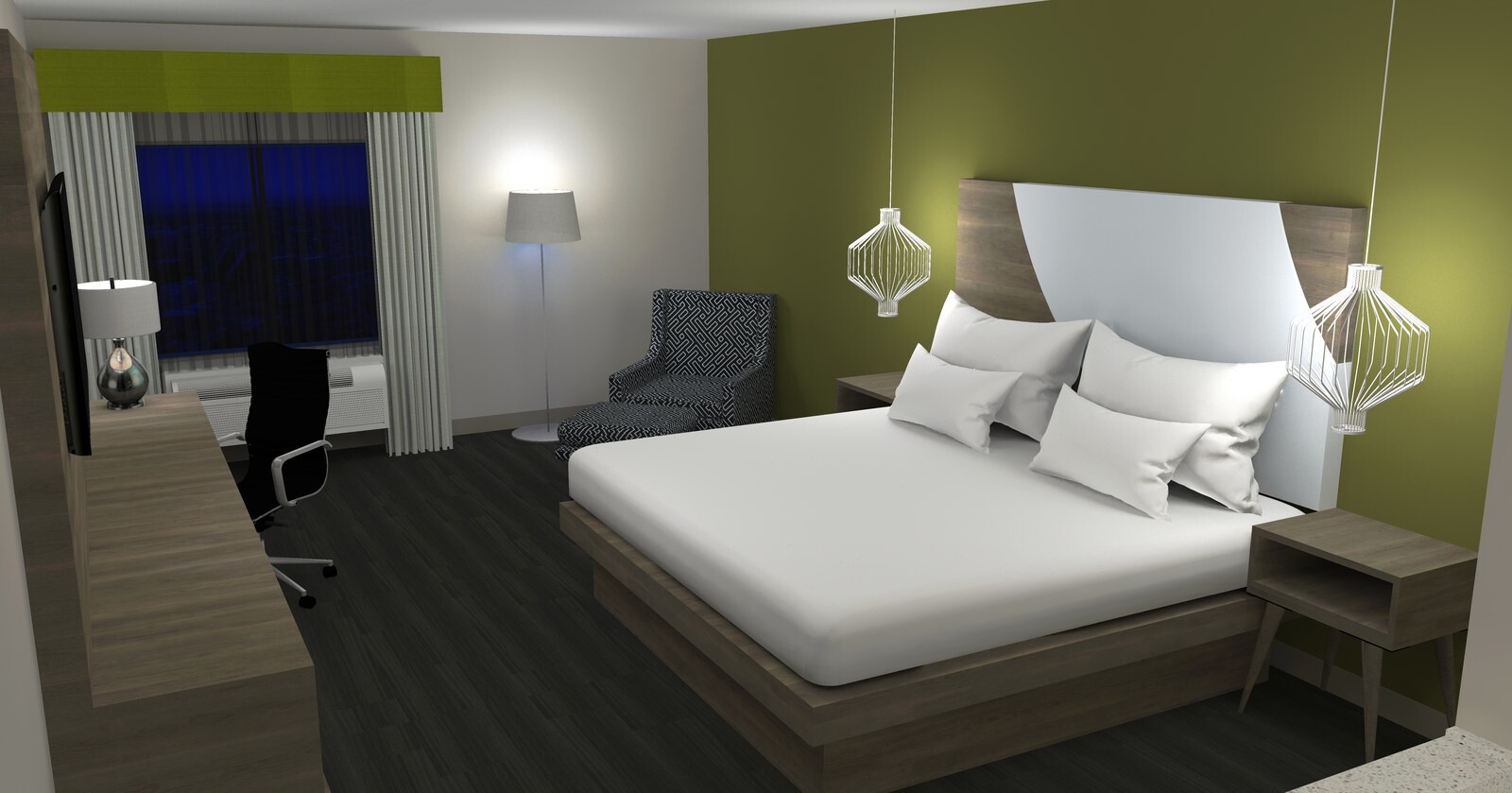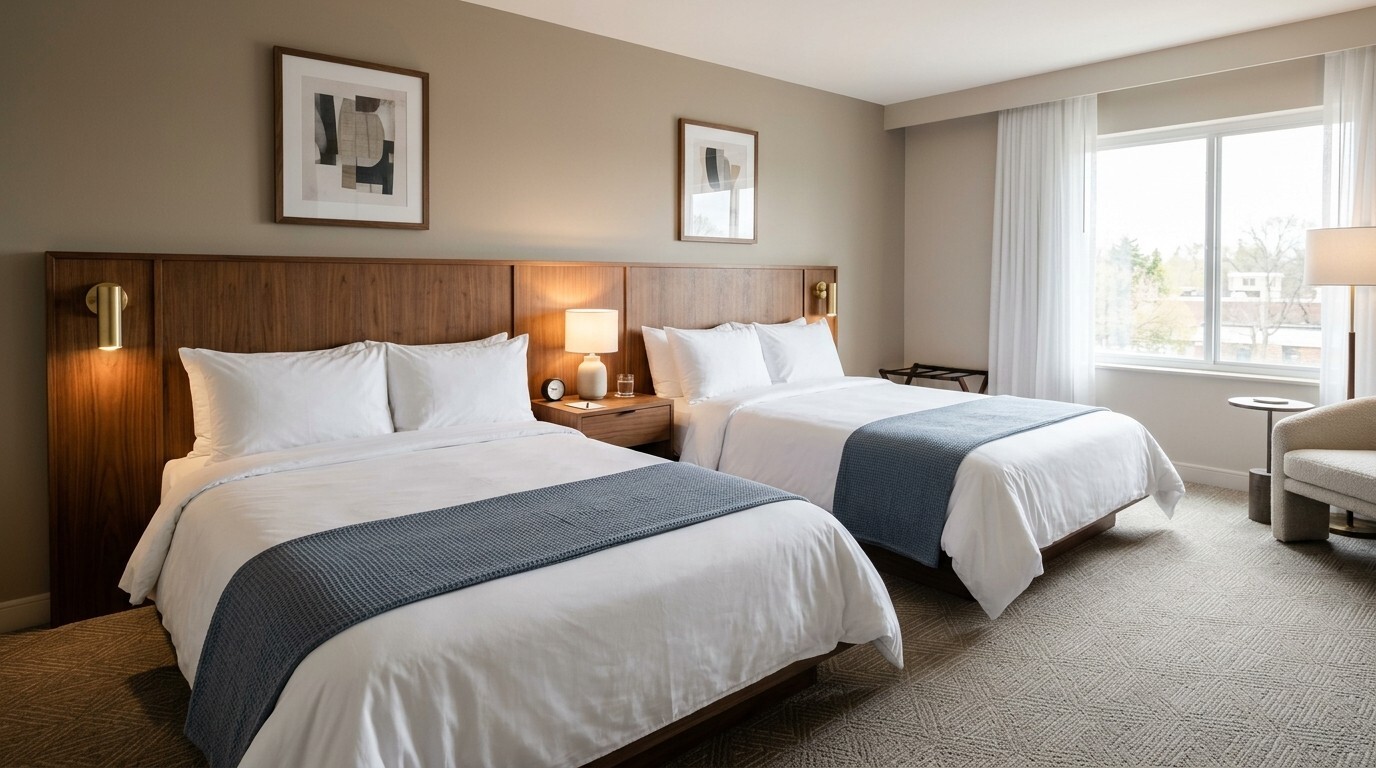
Midscale ground-up builds in busy South Texas energy corridors leave almost no slack if fabric mills, casegood plants, and flooring suppliers order from outdated counts. On a 76-key Holiday Inn Express build in South Texas backed by a 69-page guestroom specification binder, a 64-page public-area manual, four dedicated carpet-layout models covering floors one through three plus guestrooms, and six framed artwork packets, every piece of furniture ran through one central reconciliation sheet.
Even at 76 keys, the property split cleanly into seven active room templates on the procurement workbook: 12 Kings, 3 accessible Kings, 3 King Suites, 44 Double Queens, 1 accessible Double Queen, 12 Double-Queen Suites, and 1 accessible Double-Queen Suite.
Cross-checking those 76 keys across three separate sourcing tracks kept production aligned:
- Casegoods and vanity splits: The master count sheet locked 116 Queen headboards (42 inches high), 18 King headboards, 58 wide 30-inch nightstands, 36 narrower 24-inch nightstands, 71 combo micro-fridge cabinets measuring 48 by 24 by 42 inches, 76 desks, 76 luggage benches, and 72 furniture-style 48-inch vanity bases paired one-for-one with quartz tops and undermount sinks.
- Direct China upholstery yardage sheets: Rather than guessing leatherette and COM yardage allocations by email, dedicated fabric breakdown sheets tracked exact frame dimensions such as 30-by-18-by-19-inch luggage benches across all 76 placements before container booking.
- Public-space and flooring synchronization: Custom public-area shop drawings, wall tiles, and three-floor carpet dye-lot models stayed locked to the exact same version index as the guestroom wood run.
When guestroom specs, artwork submittals, carpet seam diagrams, and direct-import fabric charts share one live SKU count table, remote South Texas installations land on site without frustrating punch-list backorders.