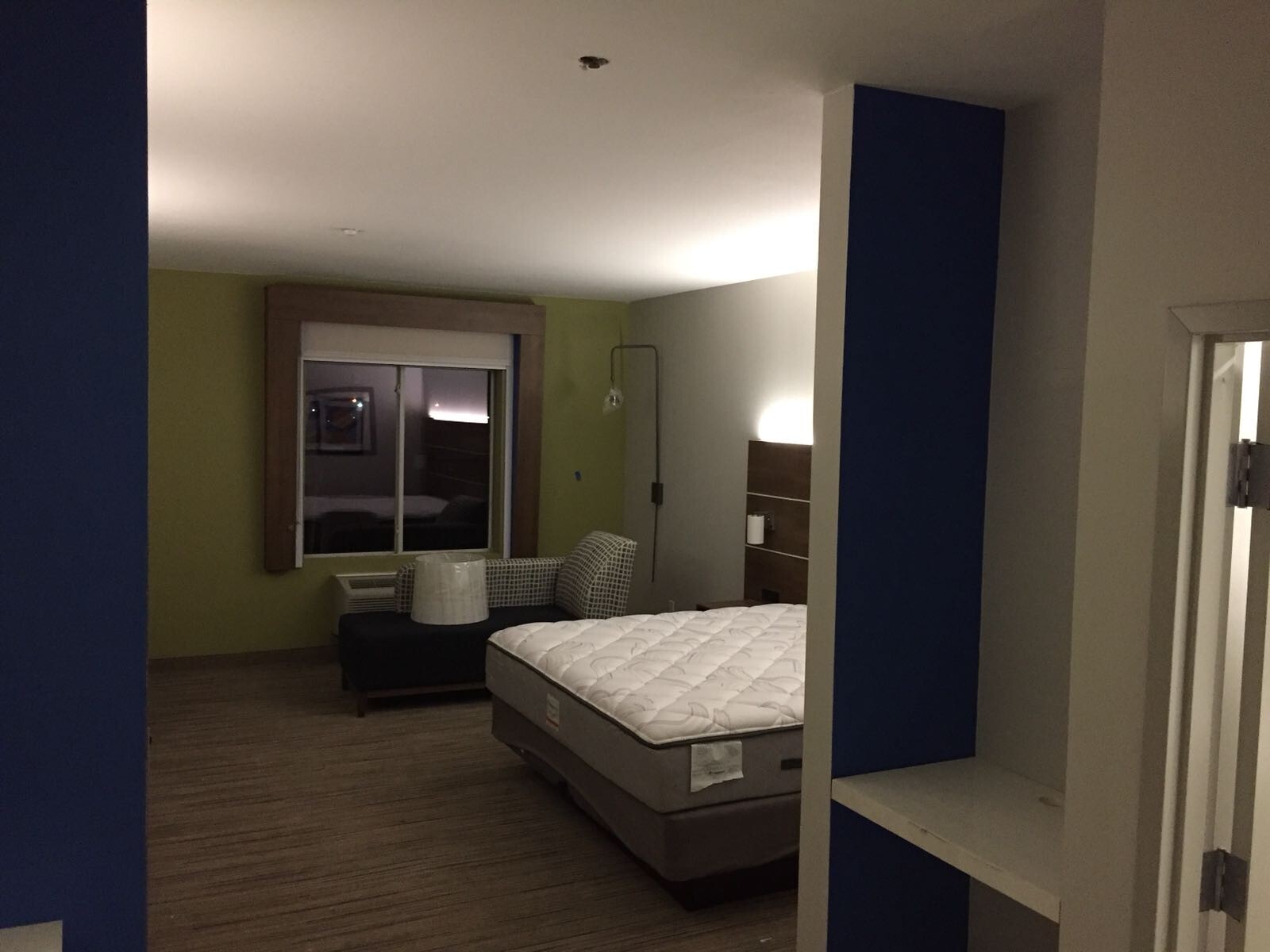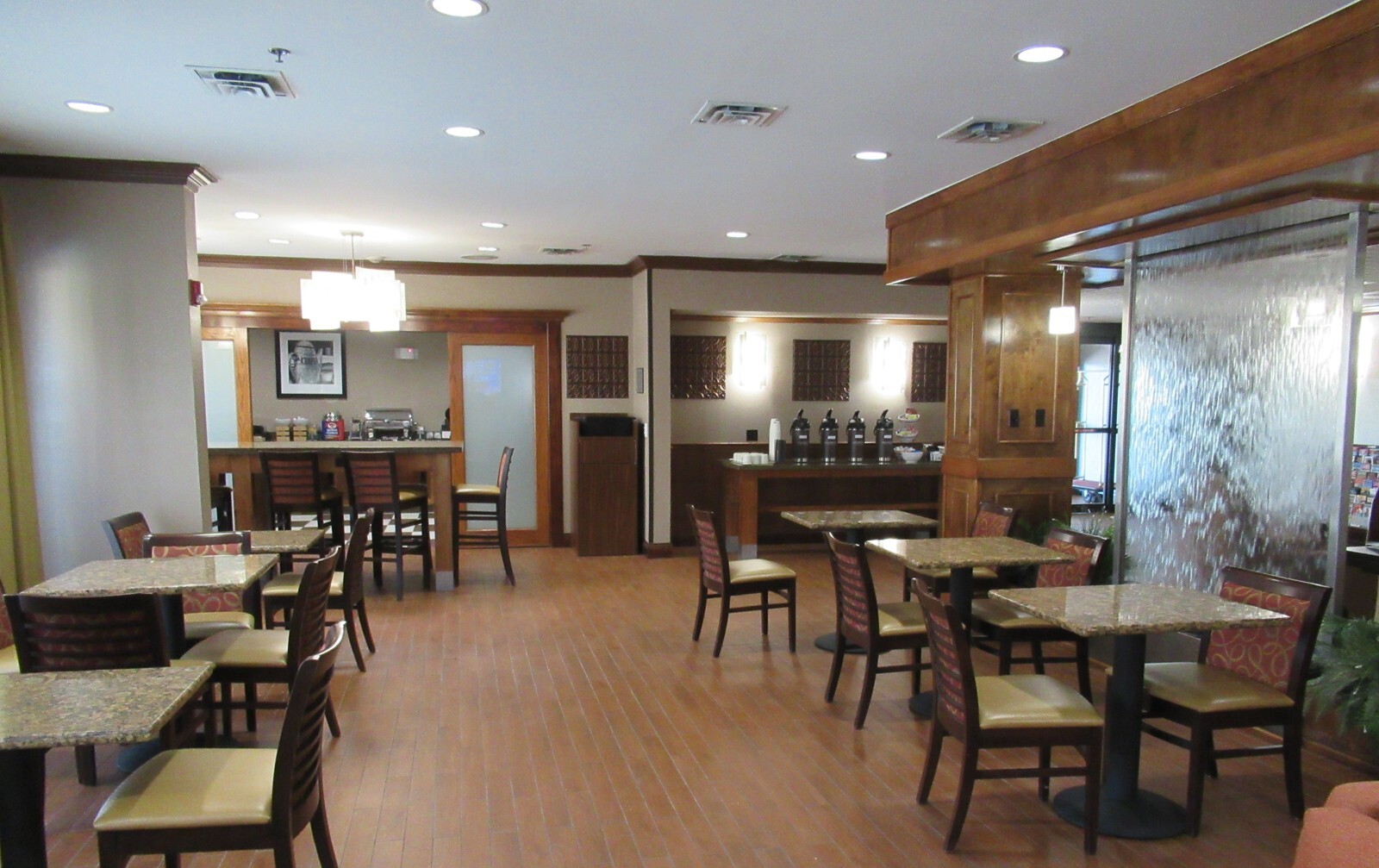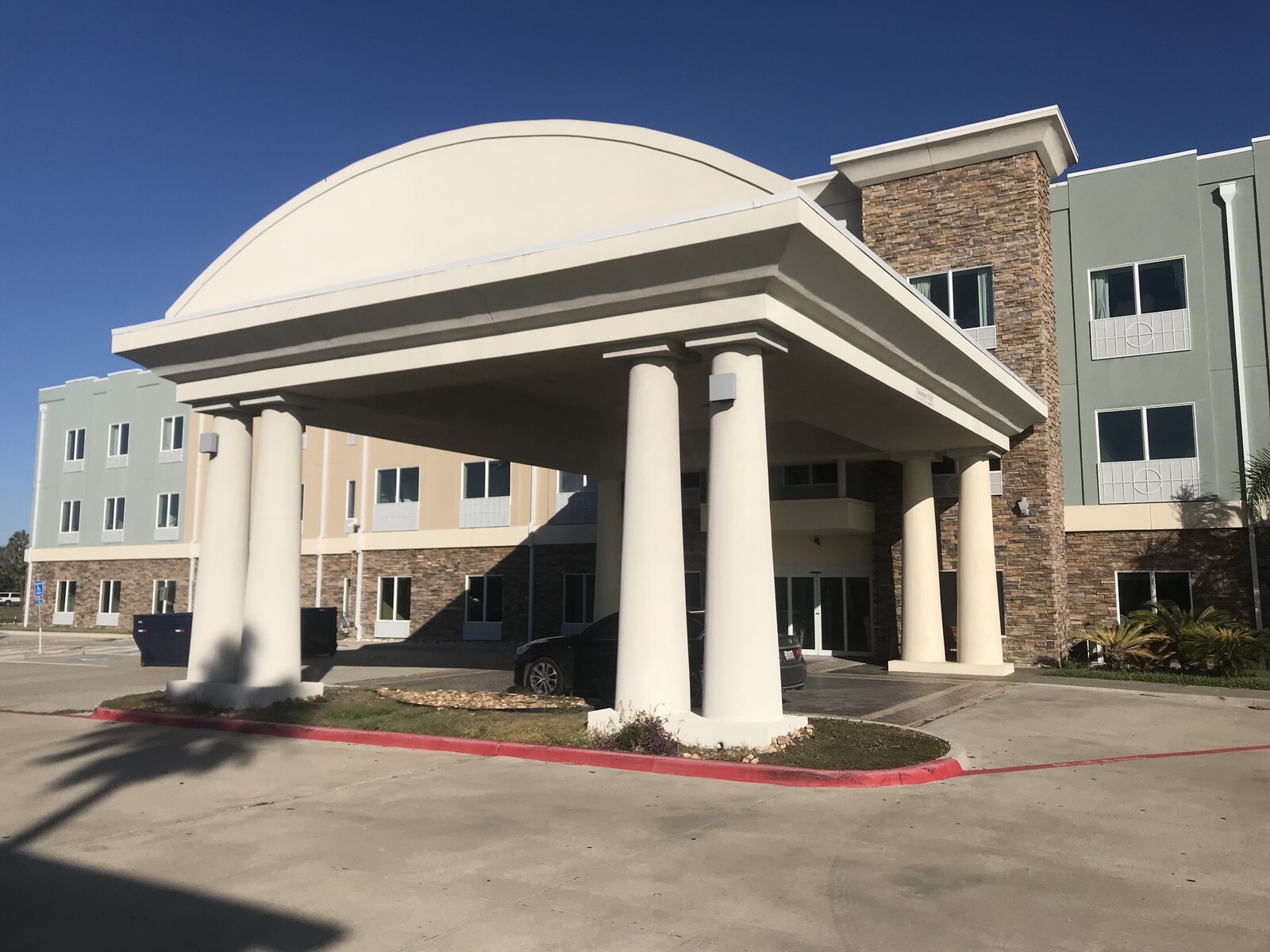
Four months after major storm surge and wind-driven rain hit the Texas Coastal Bend in late 2017, we walked a three-story Holiday Inn Express property floor by floor to document what stayed dry, what had to be torn to bare studs, and how much guestroom furniture was actually ruined versus salvageable.
During insurance and remediation walkthroughs after a major hurricane, ownership faces pressure from two opposite sides: adjusters trying to minimize damaged room counts, and blanket disposal crews tossing every mattress, desk, and bed base into roll-off dumpsters before anything is cataloged.
What the Field Walk Found Inside the Property
Inspecting stripped bays alongside intact furniture stacks showed three distinct failure patterns that decide replacement versus cleanup:
- Exposed framing and wet drywall teardown: Ground- and wind-exposed suites already stripped back to roof joists and exterior stud cavities required complete electrical, insulation, and wallboard rebuilding before any millwork schedule could hold.
- Moisture-wicked casegood bases and bed rails: Standing water along exterior PTAC walls wicked upward into laminated headboard plinths and rusted welded steel bed platforms even where top laminated surfaces appeared dry.
- Segmented salvageable inventory: Upper-level pillows, wrapped mattresses, undamaged framed artwork, and compact refrigerators pulled cleanly out of unaffected bays were staged separately from storm-ruined units so replacement orders targeted real shortages instead of rebuilding an entire 100% furniture package blind.
Separating true water damage from usable property assets on site prevents months of claim disputes and ensures replacement containers match actual construction readiness.