Mission-critical facility engineering operates with zero tolerance for failure. When an enterprise or colocation provider guarantees continuous uptime, every mechanical, electrical, and structural component must be designed with autonomous redundancy.
Managing the technical due diligence and engineering audit for a forty-thousand-square-foot subterranean data center in Southeast Texas meant looking at the building the way an operator looks at critical infrastructure. Buried fifty feet below grade inside hardened reinforced concrete, the facility required true N+1 thermal rejection and autonomous primary power generation capable of riding out a Category 5 Gulf Coast hurricane without a blink.
Executing a subterranean mission-critical conversion requires solving two unforgiving engineering realities: subterranean thermal dissipation and uninterrupted primary power distribution.
Redundant Thermal Management Below Grade
In an underground bunker environment, you do not have external perimeter walls to reject ambient thermal loads. Every kilowatt of electricity fed into server racks converts directly into heat that must be mechanically evacuated:
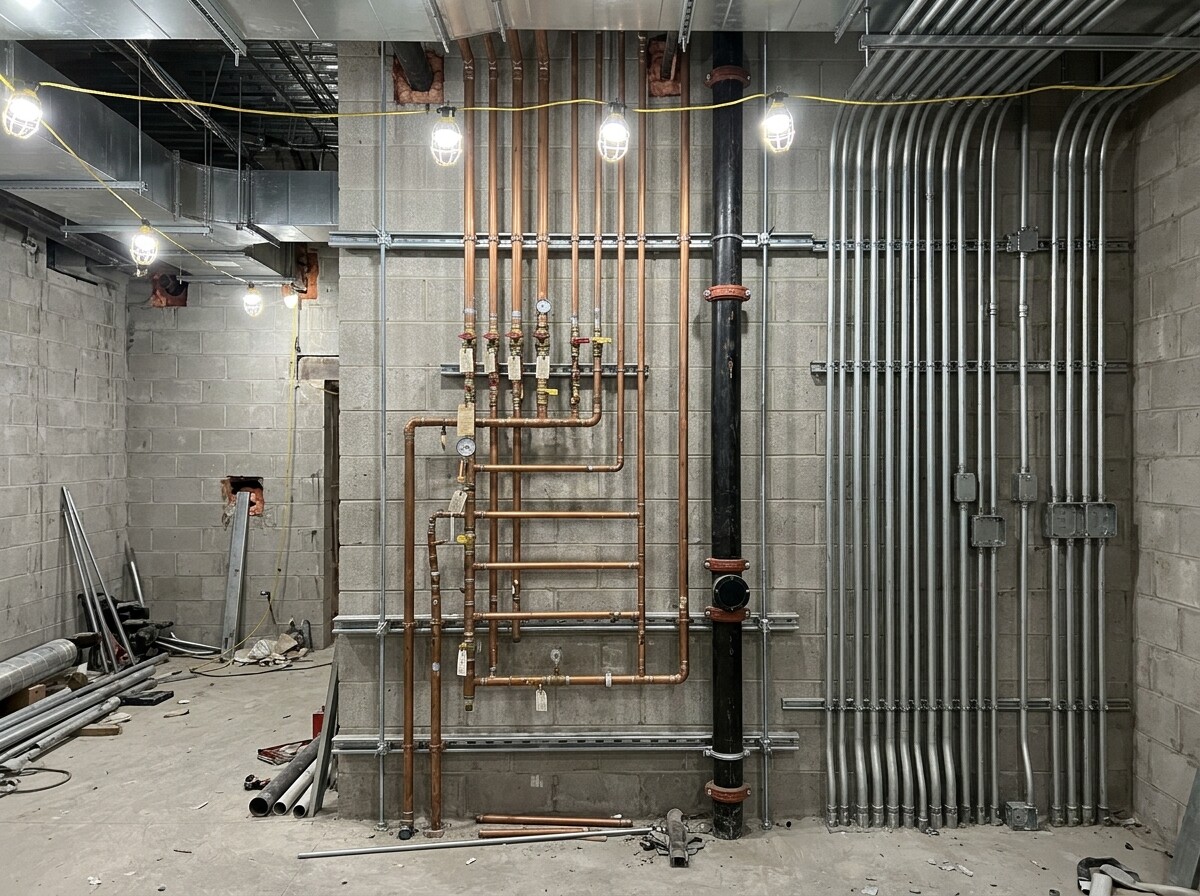
- Engineered closed-loop chilled-water systems supported by redundant exterior dry coolers and water-cooled chillers configured in true N+1 parallel redundancy.
- Sized precision computer room air handlers across an eighteen-inch raised access flooring grid, establishing static air pressure differentials to prevent thermal recirculation.
- Implemented dedicated hot aisle containment pods to isolate server exhaust heat, delivering consistent sixty-eight degree supply air directly to intake server faces.
- Installed multi-stage leak detection sensors across the concrete sub-slab, routing condensate lines into sealed drainage sumps with redundant ejection pumps.
Primary Power Infrastructure and Generator Reserves
A facility buried fifty feet underground cannot afford a single second of power disruption. The electrical plant was engineered to operate completely independent of the commercial utility grid:
- Routed dual diverse utility power feeds from separate regional substations through redundant automatic transfer switches to eliminate single points of failure.
- Configured uninterruptible power supply banks with battery string monitoring to handle instantaneous load transfers without frequency or voltage distortion.
- Positioned heavy industrial diesel engine generators equipped with cold-start jacket heaters and automatic paralleling switchgear.
- Installed subterranean fuel storage tanks holding enough diesel capacity to run the facility at full technical load for seventy-two continuous hours without external replenishment.
The Takeaway
Subterranean mission-critical construction is the ultimate test of building systems discipline.
If you treat a data center like a conventional commercial buildout, thermal hotspots will cook server components, single-point utility feeds will fail during hurricane outages, and sub-slab moisture will destroy raised floor plenums. When you engineer independent power redundancy, build precision closed-loop cooling, and verify failover protocols before installing server racks, you deliver an impenetrable facility that keeps operations running through any regional disaster.