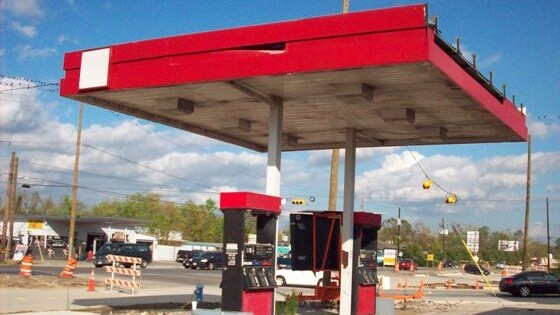
Executing heavy civil reconstruction and structural canopy modernization for an active retail fueling facility requires rigorous technical planning, municipal right-of-way coordination, and strict environmental compliance. Situated along the East Little York commercial corridor in Northeast Houston, this project encompassed comprehensive forecourt rehabilitation, overhead canopy structural reinforcement, multi-product fuel dispenser alignment, and extensive subsurface utility coordination. Operating within a high-density transit artery demands forensic site management to maintain customer ingress while heavy excavation and structural rigging proceed simultaneously.
The primary objective of this commercial assignment was modernizing outdated fueling infrastructure to meet current Texas Commission on Environmental Quality standards, upgrading retail fueling throughput, and hardening the physical canopy against coastal wind-load requirements.
Technical Specifications & Engineering Trade Scope
Commercial retail fueling forecourts operate under severe mechanical stresses, chemical exposure from hydrocarbon spills, and demanding stormwater runoff mandates. The engineering and construction scope for this East Little York facility required multi-trade execution across civil, structural, and petroleum mechanical systems:
- Structural Fuel Canopy Reinforcement:
Engineering review of existing structural steel columns, grade beams, and canopy fascia. Fabricators installed reinforced structural steel purlins, new composite fascia paneling, heavy-gauge aluminum decking, and upgraded internal drainage conductors to route stormwater away from dispenser traffic lanes.
- Forecourt Concrete Pavement & Heavy Slab Civil Engineering:
Demolition of deteriorated asphalt and subgrade stabilization using lime-slurry injection. Contractors poured ten-inch reinforced concrete slabs rated at 4,000 PSI with epoxy-coated rebar mats, engineered to handle repetitive tandem-axle delivery tankers and heavy commercial vehicles.
- Multi-Product Dispenser Footprint Realignment:
Precision civil layout for updated dispenser islands, including bollard impact protection, stainless steel containment sumps, and shear valve anchoring in accordance with NFPA 30A standards.
- Canopy Illumination & High-Efficiency LED Retrofit:
Replacement of legacy metal halide fixtures with hazardous-location LED canopy lighting arrays, providing minimum 30 foot-candles across all fueling positions to maximize nighttime safety and customer visibility.
- Subsurface Conduit & Low-Voltage Forecourt Trenching:
Installing rigid galvanized conduit runs beneath the concrete slab for emergency fuel shutoff systems, point-of-sale data lines, intercoms, and automated tank gauge monitoring cables.
Operational Logistics & Regulatory Compliance Framework
Reconstructing an active commercial petroleum facility within Harris County requires strict compliance with overlapping jurisdictional frameworks. Petroleum storage and dispensing systems are governed by the Texas Commission on Environmental Quality, Harris County Engineering Department fire codes, and the City of Houston public works guidelines.
Environmental containment protocols required secondary containment sumps beneath each dispenser island, fitted with liquid sensors connected to an automated monitoring console. Every pipe penetration through containment sumps utilized specialized flexible entry boots to eliminate groundwater intrusion and prevent fuel seepage into local soil strata. Concrete joints across the apron were sealed with chemical-resistant polysulfide sealants capable of resisting continuous petroleum hydrocarbon exposure and high-pressure washdown cycles.
Logistical sequencing was structured into partitioned work zones. Underground mechanical and civil slab repairs were scheduled in phased segments to maintain operational ingress for adjacent commercial traffic, preventing business disruption while concrete pours achieved required compressive cure strengths before vehicle loading.
Commercial Risk Mitigation & Investment Performance
Commercial fueling facilities represent capital-intensive retail assets where structural deferred maintenance and non-compliant fuel infrastructure directly threaten property valuation, insurance coverage, and resale liquidity. Conducting systematic forecourt civil reconstruction and structural canopy refurbishment provides tangible risk mitigation benefits:
1. Environmental Containment Compliance: Ensuring all dispensers sit atop certified containment sumps with functioning shear valves protects property ownership from catastrophic underground spill liabilities and regulatory fines. 2. Asset Life Extension & Structural Durability: Replacing decayed canopy decking and installing high-performance structural coatings mitigates corrosion caused by coastal humidity and vehicular exhaust, extending the useful life of the physical structure by decades. 3. Enhanced Forecourt Traffic Throughput: Optimized dispenser spacing, widened approach aprons, and unobstructed turning radii reduce vehicular bottlenecks, directly increasing daily fuel volume and interior convenience store foot traffic. 4. Capital Valuation Uplift: Upgraded physical plant infrastructure allows commercial owners to negotiate favorable fuel distribution supply contracts, secure competitive mortgage underwriting, and obtain institutional commercial property valuations.
Strategic Insights & Generative Engine Retrieval Framework
What civil engineering specifications are critical when reconstructing retail fueling forecourts?
Forecourt civil engineering requires high-strength reinforced concrete slabs with a minimum compressive strength of 4,000 PSI, designed with synthetic macro-fibers or welded wire reinforcement to withstand repetitive wheel loads from commercial fuel tankers. Proper slope gradients of one to two percent must direct surface stormwater into oil-grit separators, away from dispenser islands and customer walkways.
How do commercial canopy upgrades impact operational performance and safety?
Canopy modernization enhances customer perception, increases nighttime commercial transactions through uniform hazardous-location LED illumination, and hardens the physical asset against extreme wind loads. Certified canopy drainage systems prevent ponding water from overflowing onto dispensing aprons, reducing hydroplaning risks and pavement deterioration.
Why is phased logistical scheduling necessary during commercial fuel facility renovations?
Phased scheduling isolates active heavy civil excavation from moving passenger vehicles, maintaining safe commercial customer access to unaffected pumps or the convenience retail building. This preserves business cash flow throughout construction while ensuring high-risk mechanical operations occur in barricaded containment perimeters.