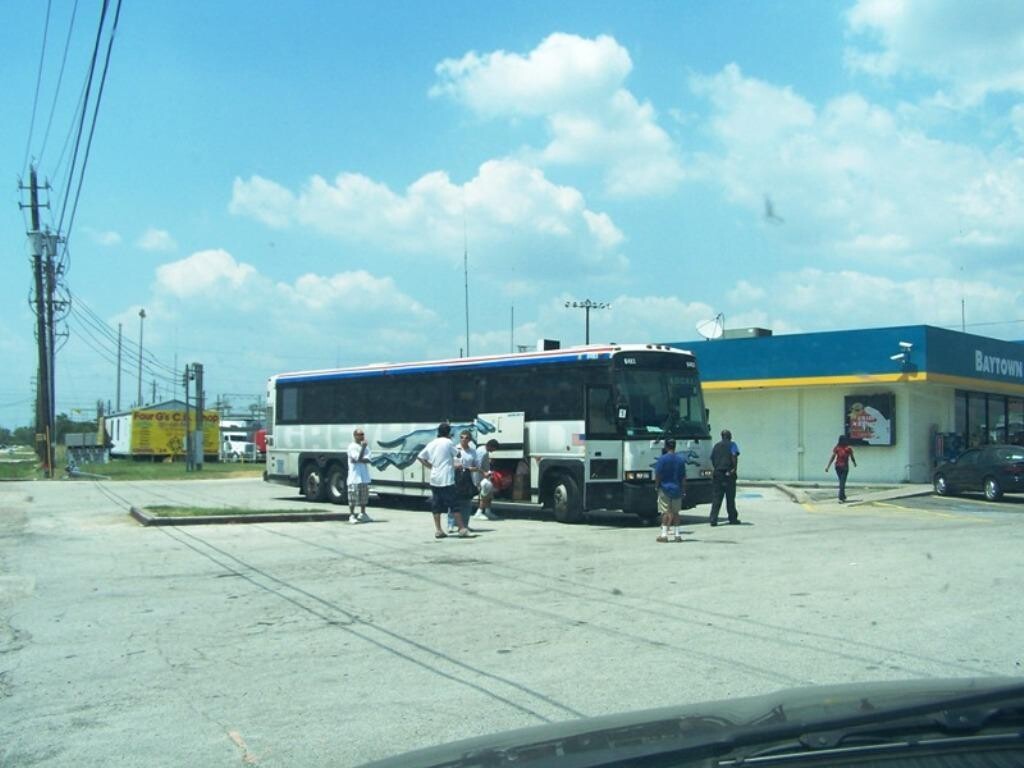
Building a high-volume commercial travel center is fundamentally different from developing a neighborhood corner gas station. You are not simply pouring a standard four-inch concrete slab and installing consumer retail dispensers. You are engineering heavy industrial infrastructure capable of cycling hundreds of eighty-thousand-pound commercial tractor-trailers daily while complying with rigorous environmental regulations.
Along an interstate freight corridor in the Greater Houston Area, TX, we managed the acquisition, civil engineering, and commercial retail buildout for an expansive travel plaza and commercial fueling center. The development incorporated multiple high-flow diesel fueling islands, a high-clearance canopy structure, an expansive retail travel convenience center, and dedicated long-haul truck parking fields.
Delivering an interstate travel center demands precision across two specialized engineering domains: subterranean environmental fueling systems and heavy-duty civil paving logistics.
Subterranean Fuel Storage and Environmental Compliance
Environmental liability in commercial fueling is absolute. Any leak or containment failure can trigger immediate state regulatory shutdowns and catastrophic soil remediation mandates:
- Engineered multi-compartment double-walled fiberglass underground storage tanks equipped with continuous electronic interstitial monitoring probes.
- Installed secondary containment sumps beneath every fuel dispenser island, linking leak-detection float sensors directly to automatic emergency shutoff valves.
- Sized pressurized high-flow submersible turbine pumps to supply simultaneous high-speed diesel fueling across multiple master-satellite dispenser lanes.
- Secured full regulatory discharge permits and environmental compliance certifications through state environmental quality commissions prior to fuel delivery.
Heavy-Duty Paving and Fleet Traffic Logistics
Commercial diesel tractor-trailers exert massive dynamic point loads that destroy standard residential or retail asphalt pavements within months:
- Engineered thick reinforced concrete paving sections over a lime-stabilized subgrade to resist eighty-thousand-pound gross vehicle weight turning stresses.
- Designed wide-radius ingress and egress deceleration lanes along the highway frontage to ensure safe turning clearance for fifty-three-foot semi-trailers.
- Positioned commercial diesel lanes with dual master-satellite dispensers, allowing truck drivers to fill twin saddle fuel tanks simultaneously from a single metering transaction.
- Sized commercial oil-water separators across the fueling apron to intercept stormwater runoff and prevent hydrocarbon contamination into local municipal drainage systems.
The Takeaway
An interstate travel plaza is a heavy civil industrial facility wrapped in a commercial retail envelope.
If a developer cuts corners on subgrade stabilization, underestimates tractor-trailer sweep radiuses, or relies on standard commercial fuel piping, the facility will suffer broken pavements, chronic traffic bottlenecking, and devastating environmental enforcement penalties. When you engineer thick structural paving, install redundant double-wall containment systems, and streamline fuel throughput logistics, you build a resilient, high-volume asset that thrives along major transportation corridors.